The Crucifixion Trilogy
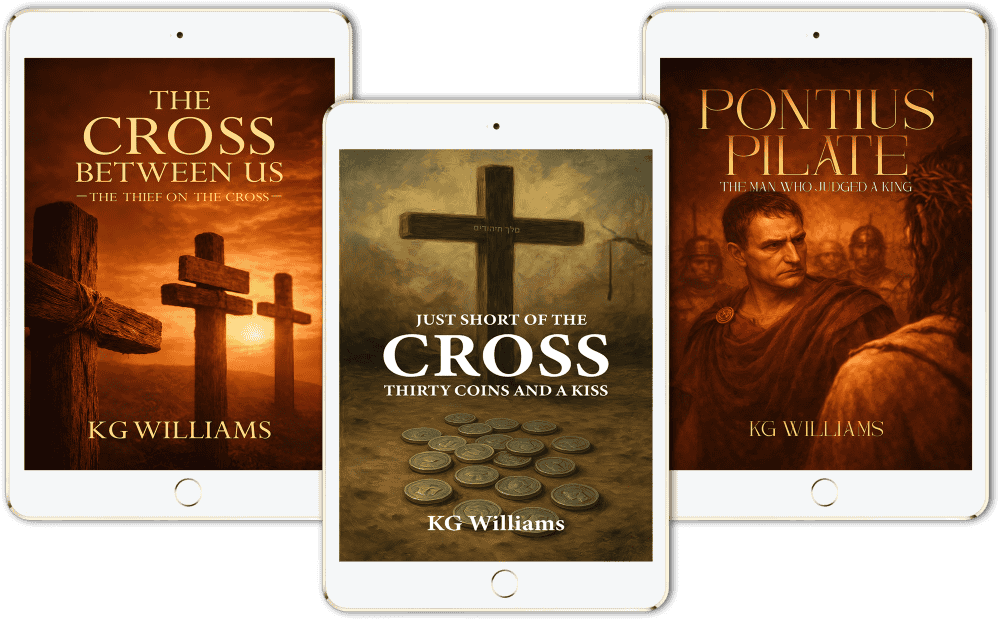
The Cross Between Us
Condemned by Rome and forgotten by society, Dismas has spent his life surviving one mistake at a time. Hardened by suffering, shaped by violence, and certain his story is ending beneath a Roman cross, he expects only pain, shame, and silence in his final hours.
But the man hanging beside him is unlike anyone he has ever known.
As darkness gathers over Golgotha, Dismas finds himself drawn into a moment that will divide eternity itself. What begins as a death sentence becomes a final confrontation with guilt, mercy, and the possibility that grace can still reach even the most broken soul.
Told through a deeply personal first-person narrative, The Cross Between Us imagines the emotional and spiritual journey of the thief who asked to be remembered, and received far more than he ever expected.
Just Short of the Cross — Thirty Coins and a Kiss
Judas Iscariot walked beside Jesus longer than most. He heard the teachings, witnessed the miracles, and stood close enough to see what others longed to understand. Yet somewhere between ambition, disappointment, and the quiet corrosion of the heart, loyalty gave way to betrayal.
For thirty pieces of silver and a single kiss, history would remember his name forever.
But betrayal is rarely born in a single moment.
Through an intimate first-person perspective, Just Short of the Cross explores the inner conflict, rationalizations, fears, and unraveling conscience of the disciple who came close to truth, yet stopped just short of surrender. It is a story of proximity without transformation, regret without peace, and the devastating weight of choices that cannot be undone.
Pontius Pilate — The Man Who Judged a King
Pontius Pilate governed Judea with the authority of Rome behind him and the threat of unrest constantly before him. Political pressure, public expectation, and fear of failure shaped every decision he made. But nothing in his years of power prepared him for the prisoner brought before him at dawn.
Jesus of Nazareth stood silent, wounded, and accused, yet somehow carried Himself like a king.
Pilate quickly realizes this trial is unlike any other. The crowd demands blood. Religious leaders demand judgment. Rome demands order. And standing between them all is one man forced to decide what to do with the innocent figure before him.
Written in a reflective first-person voice, Pontius Pilate — The Man Who Judged King explores the burden of authority, the fear of truth, and the single decision that forever tied Pilate’s name to the cross of Christ.